October 23, 2026
Five Bits of Maths That Feel Wrong But Are Not
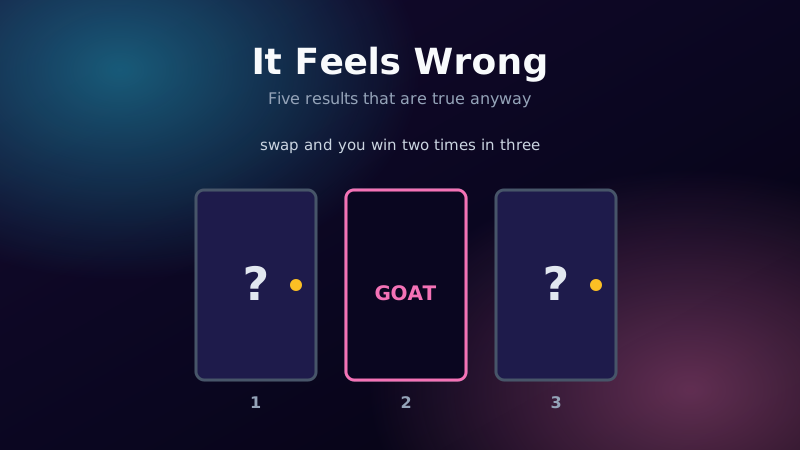
Why 23 people in a room is enough for a shared birthday, why you should always swap doors, and why folding paper 42 times would reach the Moon.

Why 23 people in a room is enough for a shared birthday, why you should always swap doors, and why folding paper 42 times would reach the Moon.
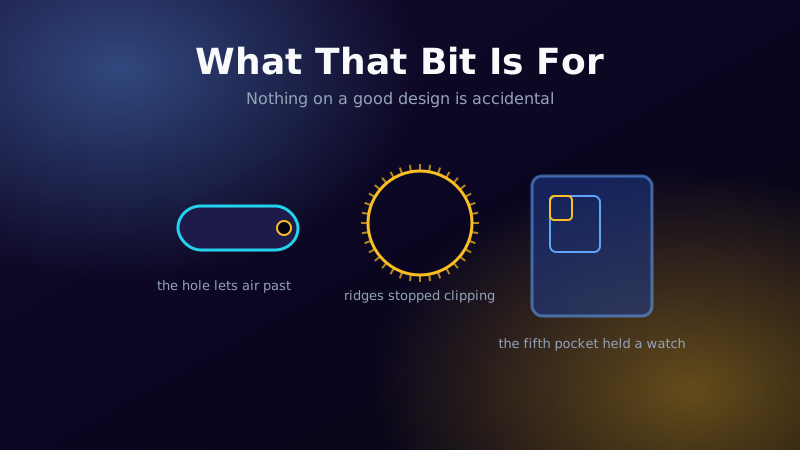
The hole in a pen lid, the tiny extra pocket on your jeans, the ridges on the edge of a coin, and the arrow next to your fuel gauge.

How deep the deepest trench goes, what the pressure does down there, how much of the ocean we have actually mapped, and why most of the animals glow.
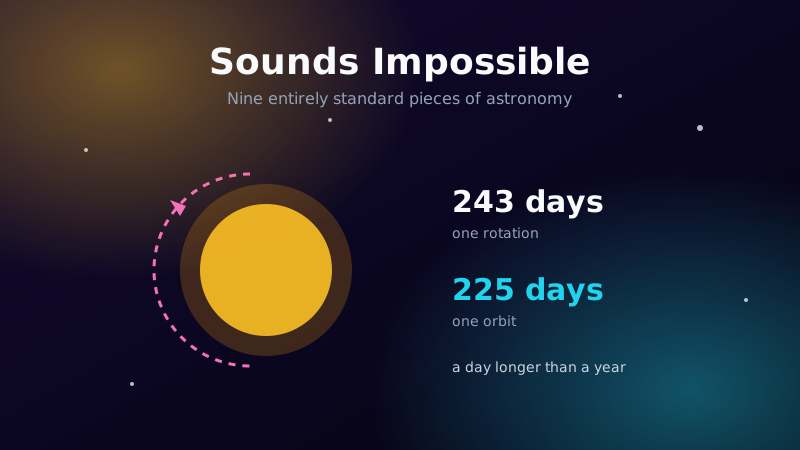
A planet where a day lasts longer than a year, a mountain three times the height of Everest, and a spoonful of star that weighs as much as a mountain range.
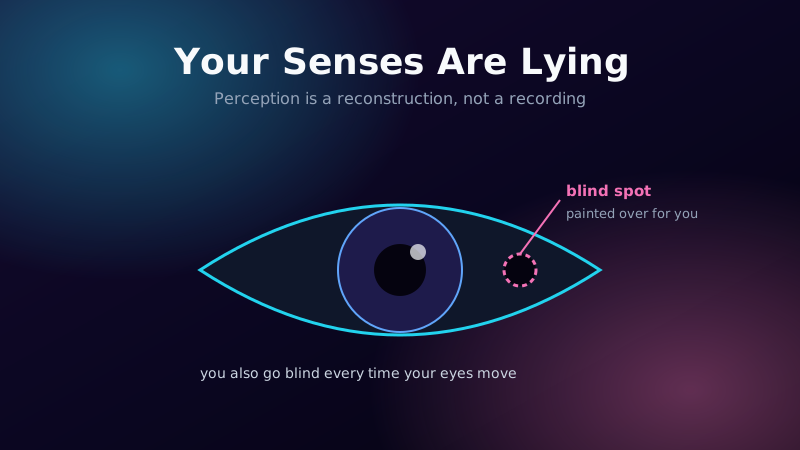
There is a hole in your vision you never notice, your eyes go blind every time they move, and what you hear changes depending on what you are looking at.
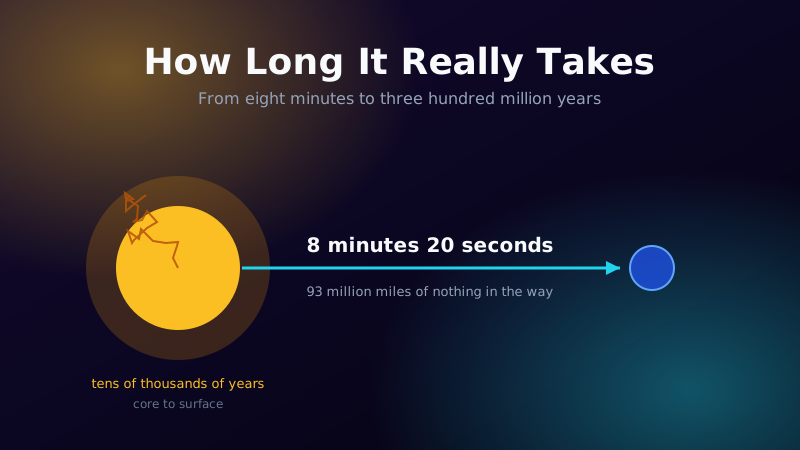
Sunlight takes eight minutes to reach you but thousands of years to escape the Sun, and a plastic bottle outlasts everyone who has ever drunk from it.

Carrots were purple, bananas are mildly radioactive, almonds are not nuts, and the most expensive spice in the world is picked by hand one thread at a time.
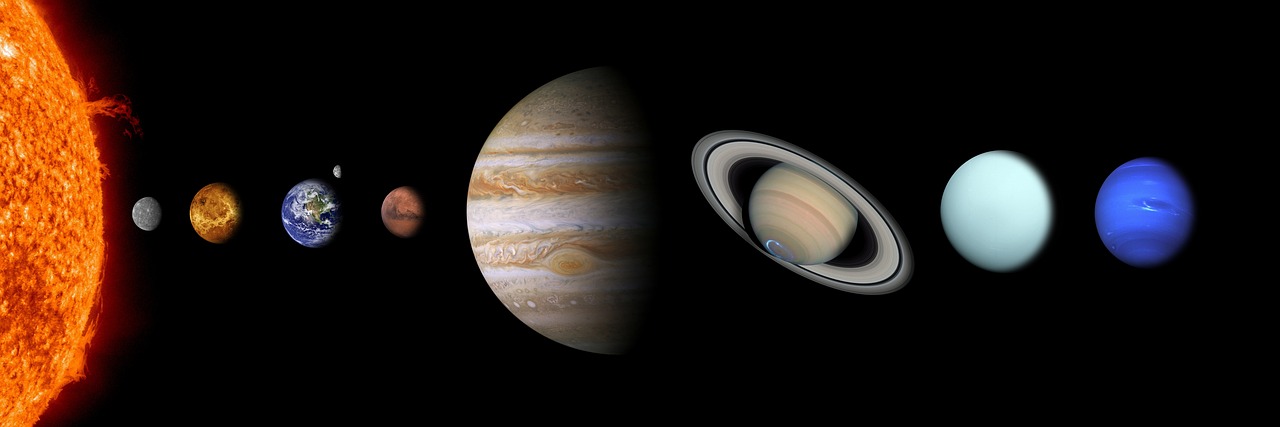
Pluto did not change. The definition did, and only because astronomers kept finding more objects like it. What actually happened in 2006, and why the answer is eight.

Wombat cubes, immortal jellyfish, shrimp that punch at the speed of a bullet, and the bird that sleeps mid-flight — all true, with the reasons why.
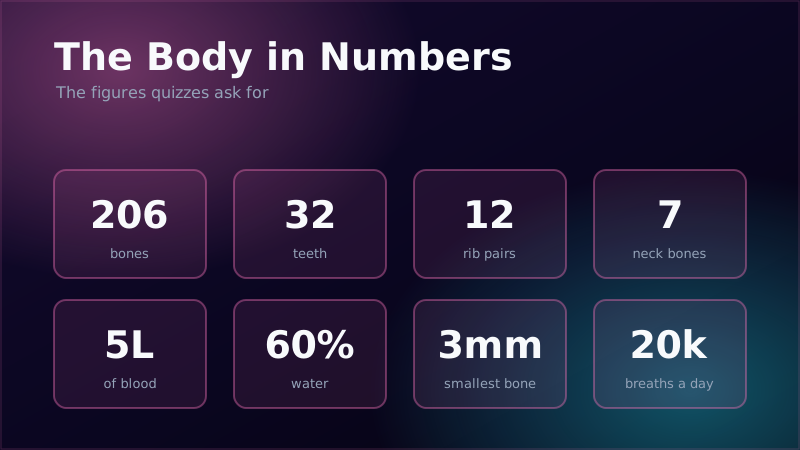
Bones, beats, blood, blinks and breaths. The figures that come up in quizzes, the ones usually quoted wrongly, and what they mean.
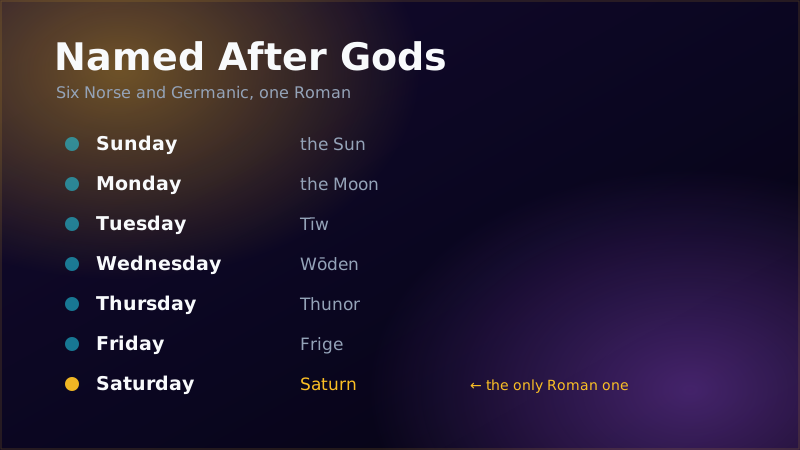
Four English days are named after Norse gods, two after the sun and moon, and one after a Roman. The full derivation, and why French and Spanish look so different.

Rain is fresh, rivers are fresh, and they both drain into the sea. So where does the salt come from, why does it not keep rising, and why is the Dead Sea so much saltier?

Fifteen common sayings traced to their real origin — and the popular explanations that turn out to be invented, including almost every acronym story you have heard.
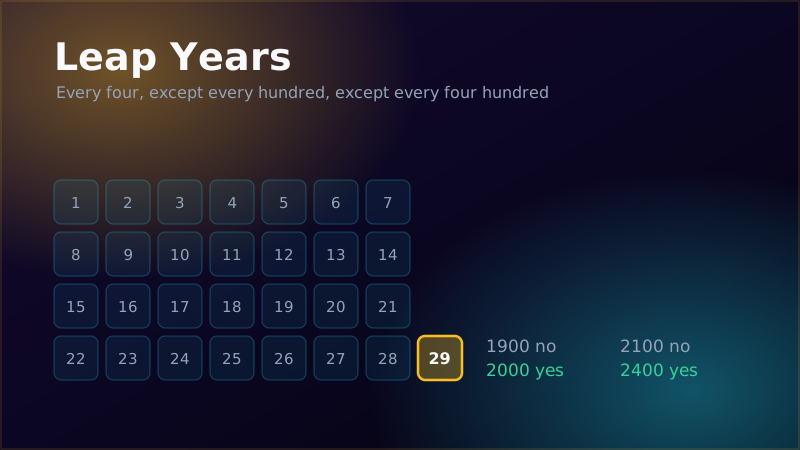
Every four years, except every hundred, except every four hundred. Why 1900 was not a leap year and 2000 was, and what the extra day is correcting.
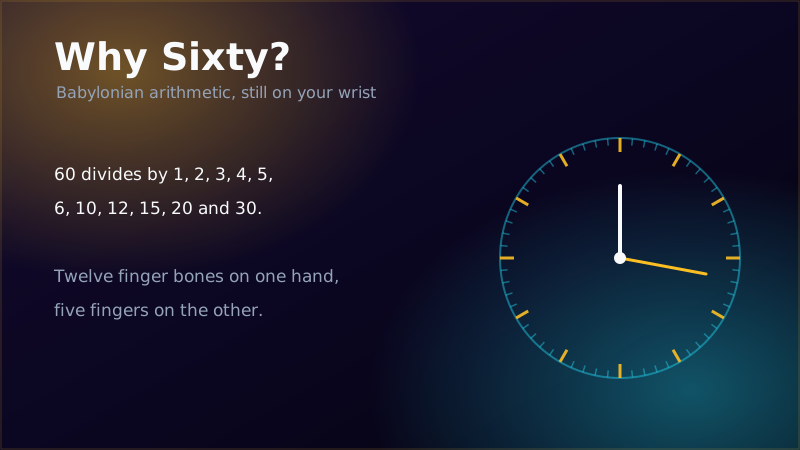
Everything else went metric. Time did not. The answer is Babylonian, involves counting on finger bones, and explains why a circle has 360 degrees too.

The layout was designed for a machine with physical levers that jammed. Why it survived the typewriter, whether Dvorak is really faster, and the "typewriter" row myth.

Chicken tikka masala, fortune cookies, French fries, Swiss fondue and more — dishes whose nationality is a marketing decision, an accident, or simply wrong.

Crescents, crosses, stars, pan-African and pan-Arab colours. How to read a national flag you have never seen before, and the rules most of them follow.

Edible honey has been found in 3,000-year-old Egyptian tombs. Three properties keep it safe almost indefinitely, and one of them explains why it must never be given to a baby.
Install the Quizmondo Arena shortcut on your home screen for instant 1-tap full-screen access: