
Why Pluto Stopped Being a Planet
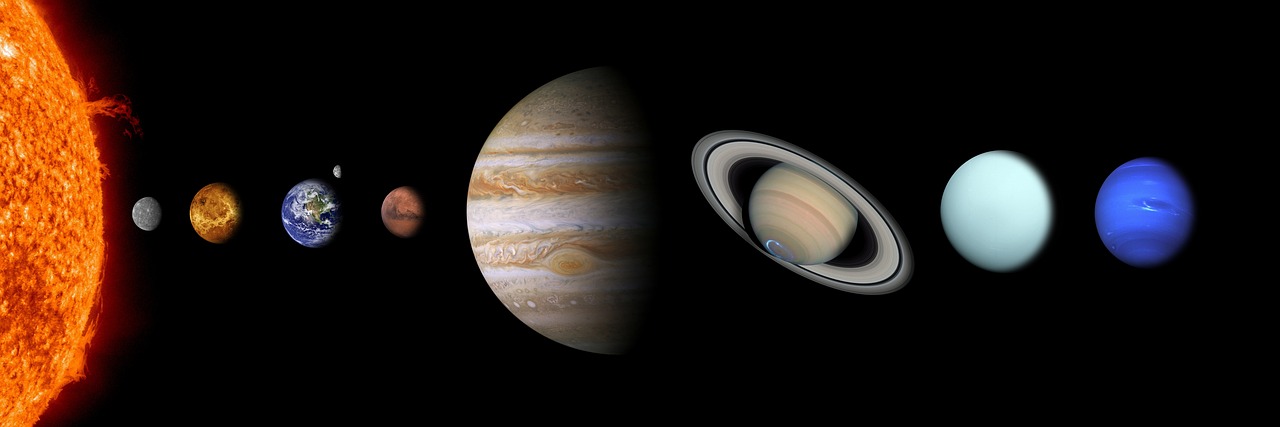
Pluto did not change. The definition did, and only because astronomers kept finding more objects like it. What actually happened in 2006, and why the answer is eight.
Ask how many planets there are and plenty of people still say nine, usually while adding that the whole thing was a bit unfair. Here is what actually happened.
Pluto was always the odd one out
Discovered in 1930 by Clyde Tombaugh, Pluto never quite fitted. It is small — smaller than our own Moon. Its orbit is tilted 17 degrees out of the plane the other planets share, and it is so stretched that for twenty years of its 248-year circuit it is closer to the Sun than Neptune. For most of the 20th century this was treated as a charming quirk.
Then astronomers started finding more of them
From the 1990s, better telescopes revealed that the outer solar system is full of icy bodies. The Kuiper Belt turned out to contain thousands of objects, and some were not far off Pluto’s size.
The decisive one was Eris, found in 2005. It is roughly Pluto’s size and about 27% more massive. Astronomers faced a straight choice: admit Eris as the tenth planet and brace for an eleventh, twelfth and twentieth, or decide what a planet actually is.
The 2006 definition
The International Astronomical Union agreed that a planet must do three things:
- Orbit the Sun.
- Be massive enough for its own gravity to pull it into a round shape.
- Have "cleared the neighbourhood" around its orbit.
Pluto passes the first two comfortably. It fails the third. It shares its region with a vast number of other Kuiper Belt objects and has not swept them up or flung them away, as the eight planets did with their own orbital paths long ago. Pluto was reclassified as a dwarf planet.
The objections, fairly stated
The vote has been criticised, and not unreasonably. Only a few hundred of the IAU’s thousands of members were present. "Clearing the neighbourhood" is vague — Earth shares its orbit with plenty of near-Earth asteroids, and Jupiter has the Trojans parked in its path. Several planetary scientists, including the lead on NASA’s New Horizons mission to Pluto, still reject the definition and argue for a purely geophysical one based on shape, under which Pluto and several moons would be planets.
That argument is genuine and ongoing. But for quiz purposes the answer is settled: eight.
The five dwarf planets
Ceres (in the asteroid belt), Pluto, Haumea, Makemake and Eris. Ceres is itself a reclassification story: it was called a planet for about fifty years after its discovery in 1801, until astronomers found so many other asteroids that it was demoted. Pluto is the second object to be treated this way, not the first.
Worth knowing
- Pluto has five moons. The largest, Charon, is so big relative to Pluto that the pair orbit a point in empty space between them.
- Nobody has seen a full Pluto year. It has not completed one orbit since its discovery, and will not until 2178.
- It was named by an eleven-year-old. Venetia Burney of Oxford suggested the Roman god of the underworld, and her grandfather passed it on.