
Twelve Animal Facts That Sound Completely Made Up
Wombat cubes, immortal jellyfish, shrimp that punch at the speed of a bullet, and the bird that sleeps mid-flight — all true, with the reasons why.
Every one of these is genuinely true, which is why they make such good quiz questions. The explanation is usually more interesting than the fact.
1. Wombats produce cube-shaped droppings
Around a hundred a night, and they really are cubic. The last stretch of the wombat’s intestine has regions of differing stiffness that shape the contents as they dry. Cubes do not roll away, which matters for an animal that marks territory on logs and rocks.
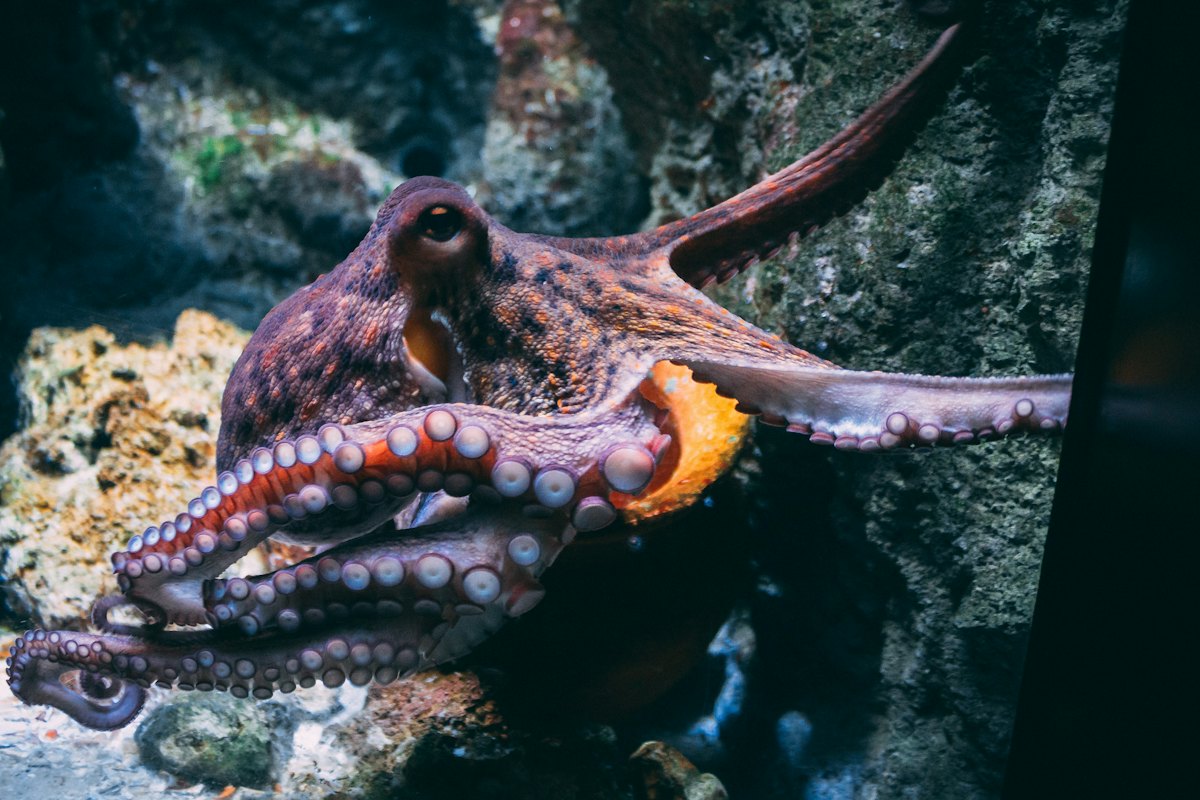
2. Octopuses have three hearts and blue blood
Two hearts push blood through the gills, one serves the rest of the body. Their blood uses haemocyanin, which carries oxygen with copper rather than iron, making it blue and far more efficient in cold, low-oxygen water. The main heart stops when they swim, which is why they prefer crawling.
3. A shrimp punches hard enough to boil water
The mantis shrimp’s club accelerates at the pace of a .22 bullet. It moves so fast that the water behind it vaporises into a bubble, which collapses with a flash of light and a shockwave. The prey is hit twice: once by the club, once by the bubble.
4. One jellyfish can reverse its own ageing
Turritopsis dohrnii, when injured or starving, can revert its adult cells to an earlier life stage and start again, in principle indefinitely. It is still perfectly edible by everything else in the sea, so immortality is theoretical.
5. Swifts stay airborne for ten months
Tracking has shown common swifts flying continuously for up to ten months, feeding, mating and sleeping on the wing. They shut down half the brain at a time while gliding, a trick dolphins also use.
6. Sea otters hold hands while sleeping
So they do not drift apart on the current. They also wrap themselves in kelp as an anchor, and each keeps a favourite stone in a pouch of loose skin under the foreleg for breaking shells.
7. Cows have best friends
Research at Northampton found that cows paired with a preferred companion had measurably lower heart rates than those penned with a random animal. Separate the pair and stress hormones rise.
8. A flamingo is not born pink
Chicks are grey. The colour comes from carotenoid pigments in the algae and brine shrimp they eat, processed in the liver and deposited in the feathers. A flamingo on the wrong diet fades to white.
9. Tardigrades survive the vacuum of space
In 2007 tardigrades were exposed to open space for ten days, and some survived and reproduced afterwards. They can enter a desiccated state called a tun, replacing their water with a sugar that turns their cells to glass.
10. Elephants cannot jump
Alone among mammals, they have no moment with all four feet off the ground at once. Their legs are built as weight-bearing columns, with little of the springy tendon that powers a jump, and the bones could not take the landing.
11. A snail can sleep for three years
Some desert and land snails seal themselves into their shell with dried mucus and enter estivation, waiting out drought. Revivals after several years are documented, including a British Museum specimen glued to a display card in 1846 that turned out to be alive four years later.
12. Crows recognise faces and hold grudges
A University of Washington study had researchers wear a particular mask while trapping crows. The birds scolded anyone wearing that mask for years afterwards — including crows that had never been trapped, having learned it from the others.