
Why Honey Never Goes Off
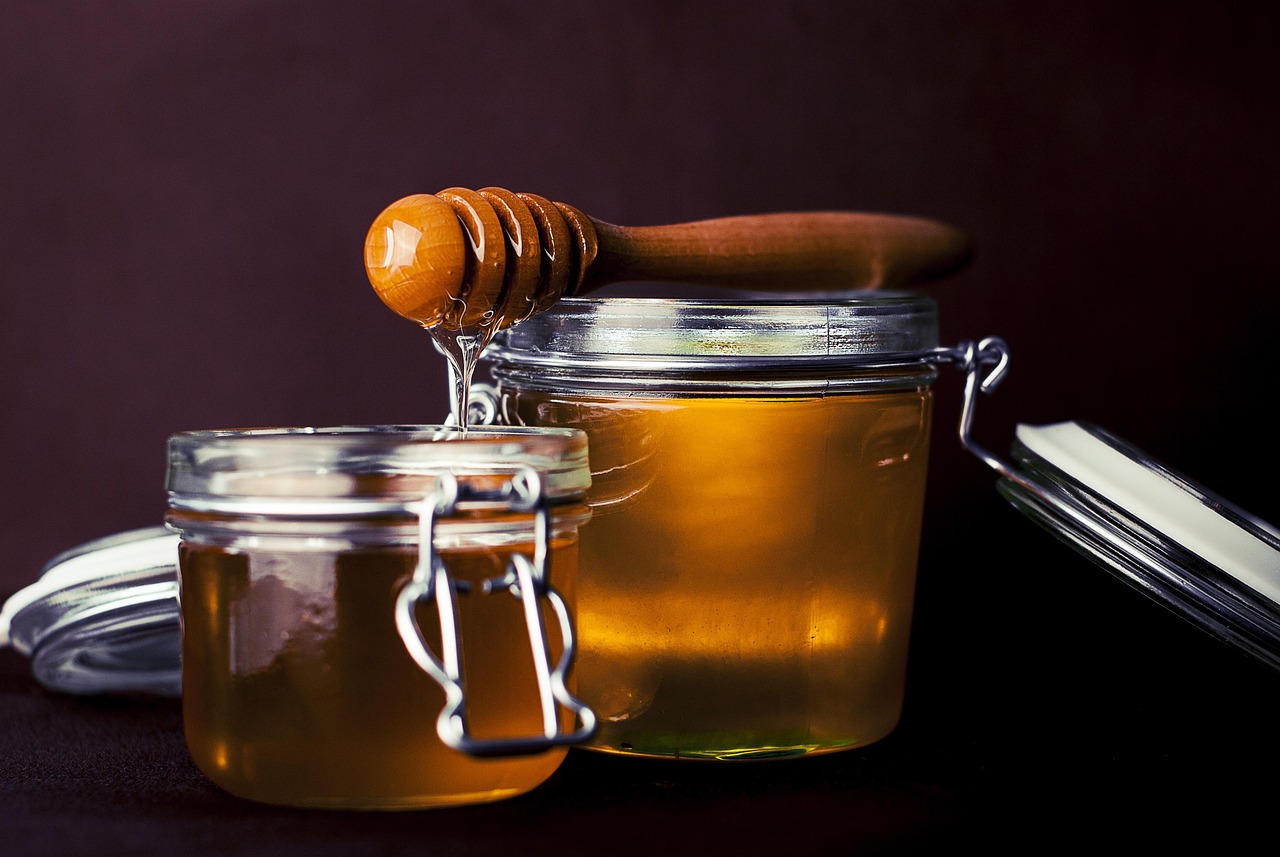
Edible honey has been found in 3,000-year-old Egyptian tombs. Three properties keep it safe almost indefinitely, and one of them explains why it must never be given to a baby.
Honey is the only common food that does not spoil. Sealed jars recovered from Egyptian tombs, thousands of years old, have been found still edible. Three things are doing the work.
1. There is almost no water in it
Honey is typically 17 to 18% water, and bacteria and moulds need far more than that to live. More importantly, honey is a supersaturated sugar solution — so much sugar dissolved in so little water that it is desperate to absorb more. It is strongly hygroscopic: it pulls water out of anything it touches, including any microbe that lands in it, drying the cell out through osmosis before it can multiply.
2. It is acidic
Honey sits at a pH of about 3.9, roughly as acidic as orange juice, which is hostile to most spoilage organisms.
3. The bees add hydrogen peroxide
This is the clever part. Bees secrete an enzyme called glucose oxidase into the nectar. When honey is diluted, that enzyme breaks glucose down into gluconic acid and hydrogen peroxide — an antiseptic. Concentrated honey produces very little, but the moment it is diluted, as it would be by any moisture that got in, peroxide production starts up and kills what arrived with the water.
Why bees make it so dry
None of this is for our benefit. Nectar is about 70 to 80% water when collected. Bees reduce it by passing it between themselves, exposing it to air in the comb and fanning their wings to evaporate the rest. They are making a food store that will survive a winter without refrigeration. The side effect is a substance that outlasts civilisations.
The conditions that break it
Honey keeps indefinitely only if kept sealed and dry. Left open, it absorbs atmospheric moisture, the sugar concentration falls, and it can ferment — which is how mead is made deliberately. A wet spoon in the jar is the usual culprit.
Crystallised is not spoiled
Honey turning grainy and pale is normal. The glucose is simply coming out of solution, and it happens faster in cooler conditions and with some floral sources than others. Standing the jar in warm water dissolves it again. Raw honey crystallises sooner because pollen grains give the crystals something to form on.
The exception: never give honey to a baby
Honey can contain dormant spores of Clostridium botulinum. They are harmless to anyone with a developed gut, because established gut bacteria out-compete them. In an infant under twelve months the gut flora is not yet established, the spores can germinate, and the result is infant botulism, which is serious. Honey’s own defences stop the bacteria growing in the jar, but they do not destroy the spores.
Worth knowing
- Honey has been used on wounds for millennia, and medical-grade honey is used in modern wound care — the peroxide and the water-drawing effect together.
- A worker bee makes about a twelfth of a teaspoon of honey in her entire life.
- Manuka honey has additional antibacterial activity from methylglyoxal, which does not depend on the peroxide mechanism.